
1. Why this book? Because the chain reaction of lipid peroxidation is everywhere
What is the chain reaction of lipid peroxidation?
Lipid peroxidation is a self-amplifying chain reaction: a single free radical can damage hundreds of polyunsaturated fatty acid molecules in cell membranes. The same process turns cooking oil rancid, hardens linseed-oil paint, and degrades biological tissues throughout the body. Learn more in our article on lipid peroxidation in aging.
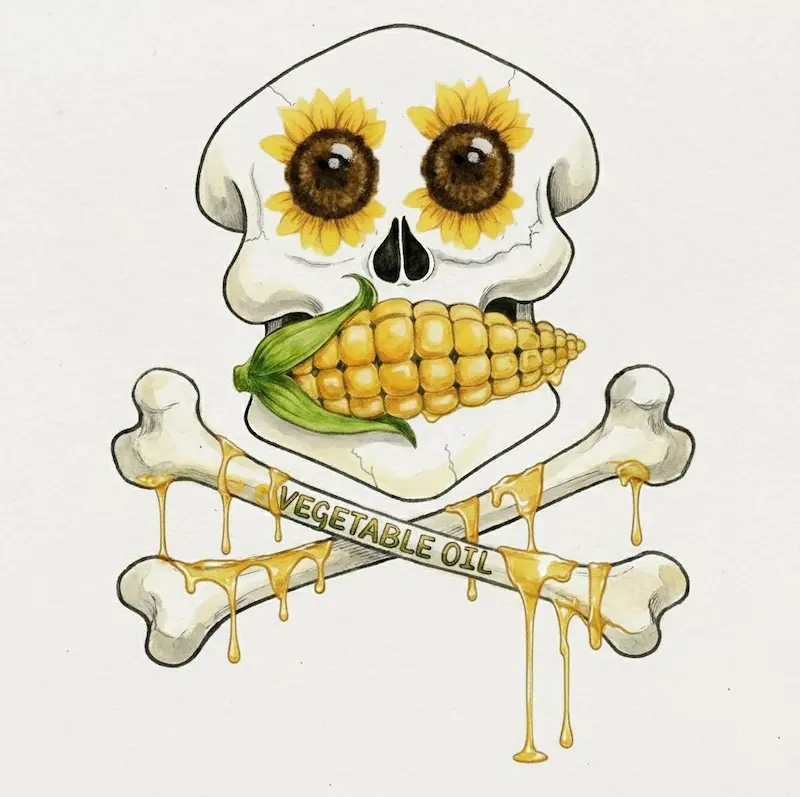
Vegetable oils easily oxidise
At a BBQ party in Texas, you drizzle a little vegetable oil into a salad bowl, but, distracted by a burst of laughter, leave the uncapped bottle on the table. The party is such a success that the cleanup only starts three days later in the evening, when the punishing Texan sun loosens its grip.
The rancid stench now rising from the bottle is so vile that even your dog recoils in disgust. The oil seems not to have taken the sun and air at all well. You pick a screwcap and seal the bottle tight, with relief.
Not every oil spoils this fast, though — some are dozens of times more oxidation-prone than others. See where each one falls in our ranking of cooking oils by oxidizability.
From Flemish studios to living cells
Let's relocate into a Flemish painter's studio, 1526 AD. Vivid pigments are ground into flax oil and brushed onto canvas. Within days the air oxidizes the oil into a hard lacquer layer, locking the fine colourful grains in place for centuries. Fast-forward 500 years, and audiences are still spellbound by the panorama of Delft embankment, or by the thin ribbon of milk suspended forever in mid-pour from a milkmaid's jug, all courtesy of this oxidation process preserving colours.
“Oil” and “air” are the common topics in this transition from Texas to Old Masters. Many types of oil readily oxidise in air, and herein lies the biological problem.
Get Chapter 1 free
The book’s opening — Van Gogh, rancid oils, and the chain reaction that ages every cell. Free, instant download.
Instant download. Occasional emails about the science — unsubscribe anytime. See our privacy policy.
Want the full picture?
This article covers just one piece of the puzzle. The book connects all the dots: from the chemistry of aging to the deuterium approach.